
A Beautiful Practice For All Your Dental Needs
.svg)
.avif)
.avif)
.avif)
Treat the Problem Inside the Tooth
When infection or inflammation reaches the inner part of a tooth, simply treating the surface won't solve the problem. Root canal treatment removes the affected tissue, cleans the inside of the tooth, and seals the canals to help prevent the infection from returning.
At Duluth Dental Care, we evaluate the tooth and its surrounding structures before recommending treatment. If a root canal is appropriate, we'll explain what is happening and what you can expect throughout the process.
When Might You Need a Root Canal?
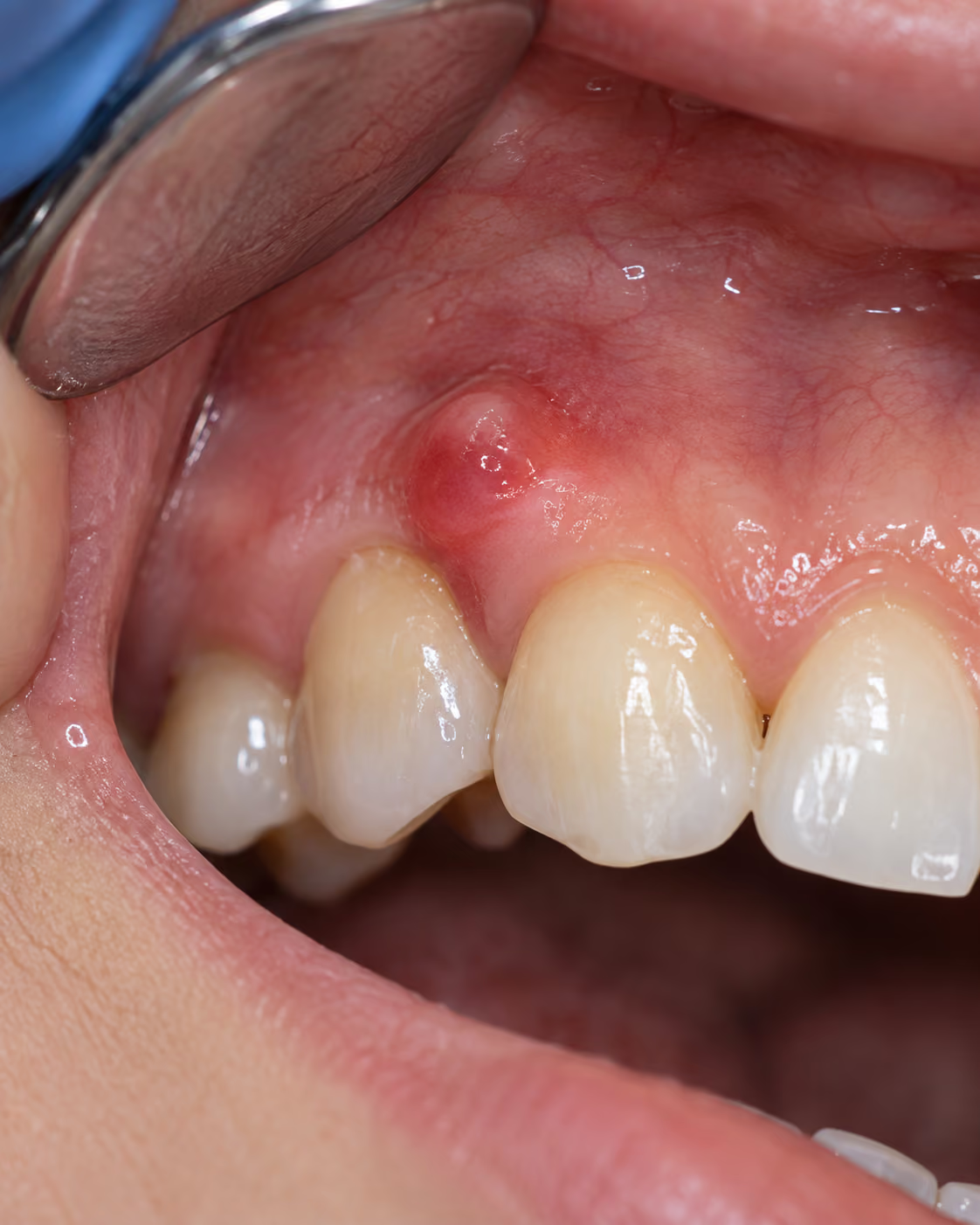
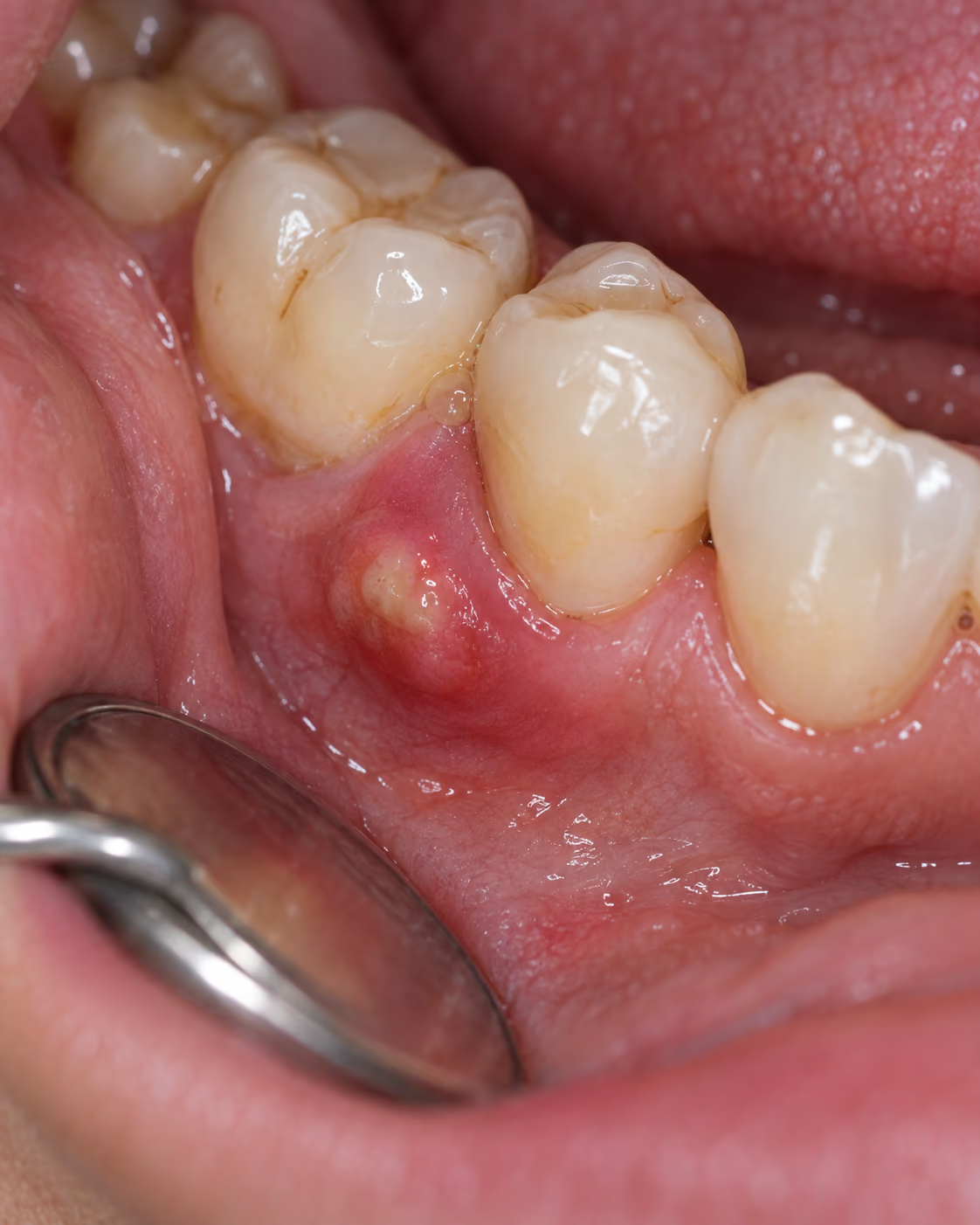
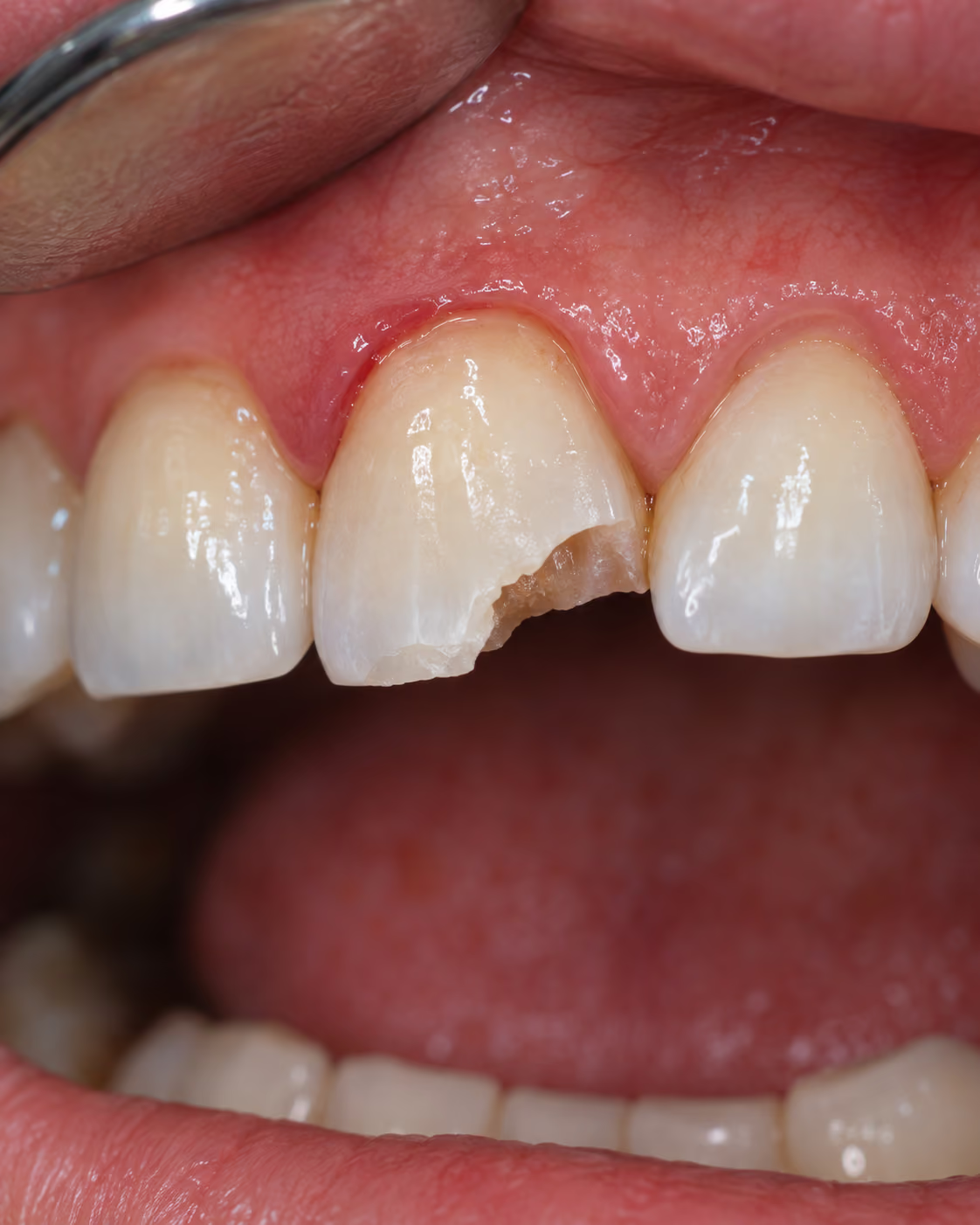
A tooth may need endodontic treatment when its inner tissue becomes infected or severely inflamed. Some infected teeth cause little or no discomfort, so the absence of pain doesn't necessarily mean the tooth is healthy.
Common warning signs include:
.avif)
.avif)
.avif)
Can a Previously Treated Tooth Need Another Root Canal?
Understanding Root Canal Retreatment
Sometimes a tooth doesn't heal as expected after its initial root canal or develops a new infection months or years later. In these situations, root canal retreatment may be an option for preserving the tooth.
Treatment can fail or a new infection can develop for several reasons, including untreated or complex canals, leakage around a restoration, new decay, or damage to the tooth or restoration.
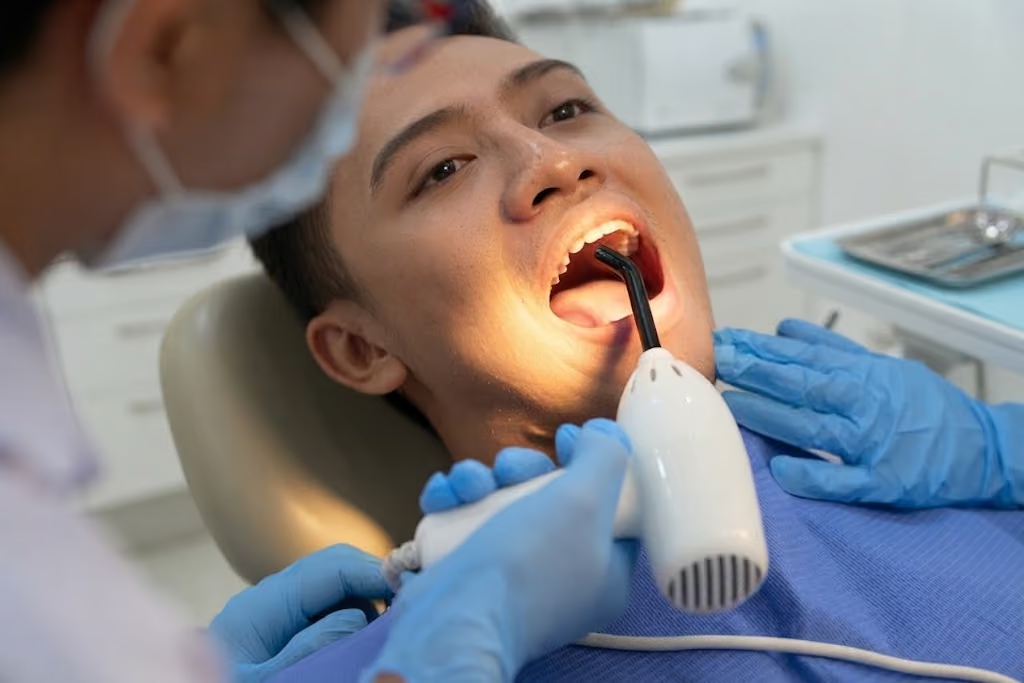
During retreatment, the existing root canal material is removed so the canals can be cleaned, examined, and sealed again. A microscope may be used when additional canals or complicated anatomy need closer inspection.
After retreatment, the tooth will generally need a permanent restoration, such as a crown, to protect it from further damage.
The Goal: Keep Your Natural Tooth When Possible
A root canal isn't about replacing a tooth—it's about treating the infection inside it while preserving as much of the natural tooth as possible. If the tooth can be predictably treated and restored, keeping it may help maintain your natural bite and avoid the need to replace the tooth. Your dentist will evaluate factors such as the amount of remaining tooth structure, cracks or fractures, infection, and the condition of previous dental work when determining whether treatment is appropriate.
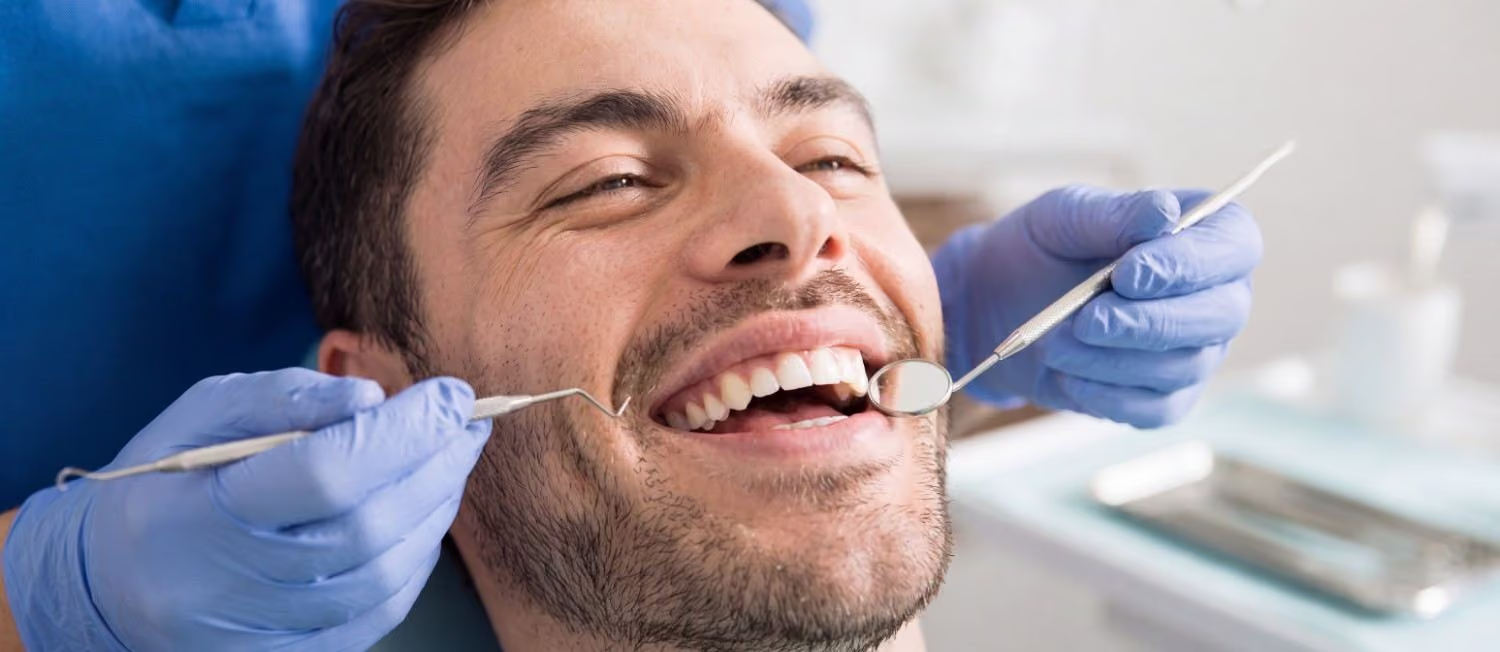

Root Canal Care Near You in Duluth, GA
Tooth pain doesn't always tell you exactly what's wrong. A proper examination can determine whether the problem involves the nerve, surrounding tissues, a previous restoration, or something else entirely.
Duluth Dental Care can evaluate your symptoms and discuss whether root canal treatment, retreatment, or another option makes sense for your tooth.

Frequently Asked Questions

Modern dental techniques and local anesthesia are used to keep you comfortable during treatment. You may experience some tenderness afterward, particularly if the tooth was already inflamed or infected.
Persistent tooth pain, lingering temperature sensitivity, pain when chewing, swelling, or a recurring infection can be signs that the inner part of a tooth is affected. An examination is needed to determine the cause.
Yes. A previously treated tooth can develop a new infection or fail to heal completely. New decay, leakage around a restoration, untreated canal anatomy, or damage to the tooth can contribute to the problem.
Root canal retreatment involves reopening a previously treated tooth, removing the existing canal filling material, cleaning and examining the canals, and then filling and sealing them again.
No. Depending on the condition of the tooth, retreatment or endodontic surgery may provide an alternative to extraction. The appropriate option depends on the individual tooth.
A tooth that has undergone root canal treatment may require additional protection from biting forces. A crown or another permanent restoration can help restore the tooth's function and protect the remaining structure.
Yes. Some infections or changes inside a tooth may not cause noticeable symptoms. Dental examination and imaging can help identify problems that aren't obvious to you.


This website is operated by Duluth Dental Care. Your use of this Site is conditioned on your acceptance, without modification, of the terms, conditions, and notices contained herein.
By accessing or using this Site, you agree to comply with all of the following Terms and Conditions. If you do not agree, please do not use our website.
We reserve the right to modify, update, or revise these Terms and Conditions at any time, without prior notice. Any such changes will be effective immediately upon posting on this page. Your continued use of the Site after any changes are made constitutes your acceptance of the updated Terms and Conditions.
This Site may contain links to external websites .
The Linked Sites are not under our control, and we are not responsible for the content of any Linked Site, including any updates or changes to those sites.
These links are provided solely for your convenience, and their inclusion does not imply endorsement or association with their operators.
As a condition of your use of this Site, you agree not to use it for any purpose that is unlawful or prohibited by these Terms and Conditions.
You may not:
- Use the Site in any way that could damage, disable, or impair the Site or interfere with others’ use and enjoyment.
- Attempt to gain unauthorized access to any portion of the Site or related systems.
- Use any automated means (robots, spiders, etc.) to access the Site for data collection or extraction.
- Upload or transmit viruses, malware, or harmful code.
You agree to use this Site only for lawful purposes related to obtaining dental care information and services from Duluth Dental Care.
This Site may include communication tools such as contact forms, chat features, comment areas, or feedback pages (collectively, “Communication Services”).
You agree to use these services only to send and receive messages that are appropriate, lawful, and related to the purpose of the Site.
You agree not to:
- Post or transmit any unlawful, defamatory, obscene, or otherwise objectionable content.
- Upload files that contain viruses or malicious code.
- Advertise, solicit, or promote goods or services not related to Duluth Dental Care
- Falsify your identity or contact information.
We reserve the right to monitor, edit, or remove any content posted through our Communication Services and to restrict access at our discretion.
By providing your mobile phone number and opting in to receive text messages from Duluth Dental Care, you consent to receive customer care SMS messages, including appointment reminders, appointment confirmations, treatment updates, and other practice-related communications.
If you consent to receive SMS from Duluth Dental Care, you agree to receive customer care text message SMS from us. Reply STOP to unsubscribe at any time. Reply HELP for assistance. Message and data rates may apply. Messaging frequency may vary.
For more information about how we collect, use, and protect your personal information, please review our Privacy Policy.
Your participation in our SMS program is voluntary and is not required to receive dental treatment or other services from our practice.
The information, materials, and services included on this Site are provided for general informational purposes only and may include typographical errors or inaccuracies. Duluth Dental Care may make improvements or changes to the Site at any time.
Information provided on this Site should not be interpreted as medical advice. For dental or health-related decisions, please consult our licensed professionals directly.
To the fullest extent permitted by law, Duluth Dental Care disclaims all warranties, express or implied, including but not limited to warranties of merchantability, fitness for a particular purpose, and non-infringement.
Duluth Dental Care and its affiliates shall not be liable for any direct, indirect, incidental, consequential, or punitive damages arising out of or relating to your use or inability to use the Site or any linked sites.
If you are dissatisfied with any portion of the Site or with any of these Terms, your sole and exclusive remedy is to discontinue using the Site.
All trademarks, names, and logos displayed on this Site are the property of Duluth Dental Care or their respective owners.
Any unauthorized use of these materials is strictly prohibited. References to external entities, companies, or products are for informational purposes only and do not imply endorsement.
Your use of this Site is also governed by our Privacy Policy, which explains how we collect, use, and protect your personal information.
By using this Site, you consent to the data practices described in our Privacy Policy.
We reserve the right, at our sole discretion, to terminate or restrict your access to the Site or any portion of it at any time, without notice, if we believe you have violated these Terms or applicable laws.
These Terms and Conditions are governed by and construed in accordance with the laws of the state in which Duluth Dental Care operates, without regard to its conflict of law principles.
You agree to submit to the exclusive jurisdiction of the courts located in that state for the resolution of any disputes arising under these Terms.
If you have any questions or concerns regarding these Terms and Conditions, please contact us at:- (770) 622-8878.

Thank you for choosing Duluth Dental Care for your dental care needs. We are committed to protecting your privacy and ensuring the security of your personal information. This Privacy Policy outlines our practices regarding the collection, use, and disclosure of information we receive from our patients and website visitors.
We may collect the following types of information:
- Personal Information
- Name, address, telephone number, and email address
- Date of birth and gender
- Dental insurance information and policy details
- Medical and dental history
- Treatment records and photographs
- Payment information
We use the information we collect for the following purposes:
- To provide, maintain, and improve our dental services
- To process payments and send billing information
- To communicate with you about appointments, treatment, and services
- To send health reminders, special offers, and newsletters (with your consent)
- To improve our website functionality and user experience
- To comply with legal obligations and industry regulations
We will not share your opt-in to an SMS campaign with any third party for purposes unrelated to providing you with the services of that campaign.
We may share your Personal Data, including your SMS opt-in or consent status, with third parties that help us provide our messaging services — including but not limited to platform providers, phone companies, and any other vendors who assist us in the delivery of text messages.
All of the above categories exclude text messaging originator opt-in data and consent; this information will not be shared with any third parties.
We may share your personal information with:
- Healthcare providers and specialists involved in your treatment
- Insurance companies and other third parties for payment purposes
- Business associates who provide services on our behalf (billing, software, etc.)
- Legal authorities, when required by law or to protect our rights
We do not sell, rent, or trade your personal information to third parties for marketing purposes.
We implement appropriate technical and organizational measures to protect your personal information from unauthorized access, disclosure, alteration, and destruction. However, no method of transmission over the Internet or electronic storage is 100% secure, and therefore, we cannot guarantee absolute security.
Depending on your location, you may have certain rights regarding your personal information, including:
- The right to access your personal information
- The right to correct inaccurate information
- The right to request the deletion of your information
- The right to restrict or object to processing
- The right to data portability
To exercise these rights, please contact us using the information provided below.
Our website may use cookies and similar technologies to enhance your browsing experience and collect information about how you use our website. You can control cookies through your browser settings, but disabling cookies may limit your use of certain website features.
Our website may contain links to third-party websites. We are not responsible for the privacy practices or content of these websites. We encourage you to review the privacy policies of any third-party websites you visit.
We may update this Privacy Policy from time to time to reflect changes in our practices or legal requirements. We will post the updated Privacy Policy on our website with a revised “Last Updated” date. Your continued use of our services after such modifications constitutes your acknowledgment of the updated Privacy Policy.
By using our services or providing us with your information, you consent to the collection, use, and disclosure of information as described in this Privacy Policy.
This Privacy Policy is in addition to our Notice of Privacy Practices, which describes how we may use and disclose your protected health information as required by the Health Insurance Portability and Accountability Act (HIPAA). You can request a copy of our Notice of Privacy Practices at our office or find it on our website.
If you have any questions, concerns, or requests regarding this Privacy Policy or our privacy practices, please contact us at:- (770) 622-8878