
A Beautiful Practice For All Your Dental Needs
.svg)
.avif)
.avif)
A Calmer Way to Approach Dental Treatment
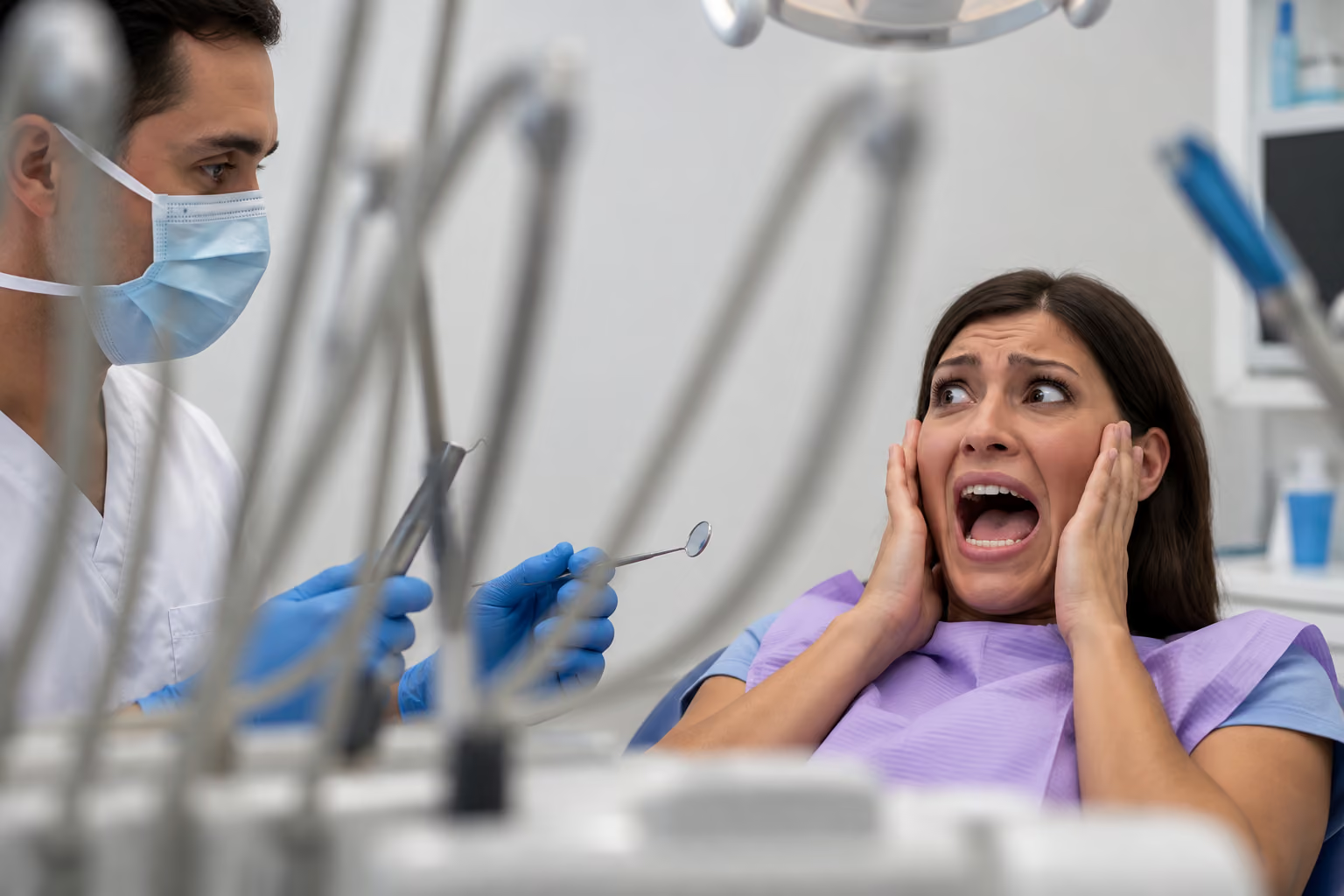
Feeling nervous about dental care can make even a routine appointment feel overwhelming. Oral sedation uses prescribed medication to help you relax before and during certain dental procedures.
At Duluth Dental Care, sedation is considered based on your procedure, comfort level, and overall needs. Before treatment, your dental team will explain what to expect and provide instructions for using the medication safely.
Who May Benefit From Oral Sedation?
Sedation isn't necessary for everyone, and not every patient or procedure is appropriate for it. Oral sedation may be an option for patients who:



What Does Oral Sedation Feel Like?
Oral sedation medication can make you feel relaxed and drowsy while remaining responsive. The eact experience depends on the medication prescribed and your individual response.
Because sedation can affect alertness and coordination, you'll need to follow your dentist's instructions about transportation, eating, medications, and activities after your appointment.

Safety Starts Before the Appointment
Sedation isn't simply about taking a pill before visiting the dentist. Your dental team needs to know about relevant medications, allergies, and health considerations before determining whether oral sedation is appropriate. Following the prescribed dose and your pre- and post-treatment instructions is important. Do not drive yourself after sedation unless your dentist specifically confirms that it is safe to do so.
.avif)

Dental Care Without the Same Level of Anxiety
You shouldn't feel embarrassed about being nervous at the dentist. Let your dental team know what makes you uncomfortable so they can discuss ways to make your experience more manageable.
For appropriate patients, oral sedation can be one part of a broader approach to making dental treatment easier to tolerate.

Oral Sedation Near You in Duluth, GA
If dental anxiety has caused you to postpone appointments or avoid treatment, talk with Duluth Dental Care about your concerns. We can evaluate your needs and explain whether oral sedation is an appropriate option for your care.

Frequently Asked Questions

Depending on the medication and level of sedation, you generally remain conscious and able to respond, although you may feel very relaxed or drowsy.
No. Oral sedation is not the same as general anesthesia. The level of sedation and your ability to respond depend on the medication and dosage used.
It can help appropriate patients manage anxiety and feel more relaxed during dental treatment. Your dentist will determine whether it is suitable for you.
You should not plan to drive yourself after taking a sedative unless your dental provider specifically tells you that it is safe. Arrange transportation and follow the instructions provided by your dental team.
Sedation can be used safely when the appropriate medication and dosage are selected and the patient's circumstances are properly evaluated. Your dental team will review the relevant information before treatment.
Yes. Tell your dental team about medications, supplements, allergies, and other relevant information before sedation so they can determine whether oral sedation is appropriate and provide safe instructions.
Sedation for children requires careful consideration of age, health, procedure, and the type of medication involved. Your dental provider can determine whether sedation is appropriate for a child.


This website is operated by Duluth Dental Care. Your use of this Site is conditioned on your acceptance, without modification, of the terms, conditions, and notices contained herein.
By accessing or using this Site, you agree to comply with all of the following Terms and Conditions. If you do not agree, please do not use our website.
We reserve the right to modify, update, or revise these Terms and Conditions at any time, without prior notice. Any such changes will be effective immediately upon posting on this page. Your continued use of the Site after any changes are made constitutes your acceptance of the updated Terms and Conditions.
This Site may contain links to external websites .
The Linked Sites are not under our control, and we are not responsible for the content of any Linked Site, including any updates or changes to those sites.
These links are provided solely for your convenience, and their inclusion does not imply endorsement or association with their operators.
As a condition of your use of this Site, you agree not to use it for any purpose that is unlawful or prohibited by these Terms and Conditions.
You may not:
- Use the Site in any way that could damage, disable, or impair the Site or interfere with others’ use and enjoyment.
- Attempt to gain unauthorized access to any portion of the Site or related systems.
- Use any automated means (robots, spiders, etc.) to access the Site for data collection or extraction.
- Upload or transmit viruses, malware, or harmful code.
You agree to use this Site only for lawful purposes related to obtaining dental care information and services from Duluth Dental Care.
This Site may include communication tools such as contact forms, chat features, comment areas, or feedback pages (collectively, “Communication Services”).
You agree to use these services only to send and receive messages that are appropriate, lawful, and related to the purpose of the Site.
You agree not to:
- Post or transmit any unlawful, defamatory, obscene, or otherwise objectionable content.
- Upload files that contain viruses or malicious code.
- Advertise, solicit, or promote goods or services not related to Duluth Dental Care
- Falsify your identity or contact information.
We reserve the right to monitor, edit, or remove any content posted through our Communication Services and to restrict access at our discretion.
By providing your mobile phone number and opting in to receive text messages from Duluth Dental Care, you consent to receive customer care SMS messages, including appointment reminders, appointment confirmations, treatment updates, and other practice-related communications.
If you consent to receive SMS from Duluth Dental Care, you agree to receive customer care text message SMS from us. Reply STOP to unsubscribe at any time. Reply HELP for assistance. Message and data rates may apply. Messaging frequency may vary.
For more information about how we collect, use, and protect your personal information, please review our Privacy Policy.
Your participation in our SMS program is voluntary and is not required to receive dental treatment or other services from our practice.
The information, materials, and services included on this Site are provided for general informational purposes only and may include typographical errors or inaccuracies. Duluth Dental Care may make improvements or changes to the Site at any time.
Information provided on this Site should not be interpreted as medical advice. For dental or health-related decisions, please consult our licensed professionals directly.
To the fullest extent permitted by law, Duluth Dental Care disclaims all warranties, express or implied, including but not limited to warranties of merchantability, fitness for a particular purpose, and non-infringement.
Duluth Dental Care and its affiliates shall not be liable for any direct, indirect, incidental, consequential, or punitive damages arising out of or relating to your use or inability to use the Site or any linked sites.
If you are dissatisfied with any portion of the Site or with any of these Terms, your sole and exclusive remedy is to discontinue using the Site.
All trademarks, names, and logos displayed on this Site are the property of Duluth Dental Care or their respective owners.
Any unauthorized use of these materials is strictly prohibited. References to external entities, companies, or products are for informational purposes only and do not imply endorsement.
Your use of this Site is also governed by our Privacy Policy, which explains how we collect, use, and protect your personal information.
By using this Site, you consent to the data practices described in our Privacy Policy.
We reserve the right, at our sole discretion, to terminate or restrict your access to the Site or any portion of it at any time, without notice, if we believe you have violated these Terms or applicable laws.
These Terms and Conditions are governed by and construed in accordance with the laws of the state in which Duluth Dental Care operates, without regard to its conflict of law principles.
You agree to submit to the exclusive jurisdiction of the courts located in that state for the resolution of any disputes arising under these Terms.
If you have any questions or concerns regarding these Terms and Conditions, please contact us at:- (770) 622-8878.

Thank you for choosing Duluth Dental Care for your dental care needs. We are committed to protecting your privacy and ensuring the security of your personal information. This Privacy Policy outlines our practices regarding the collection, use, and disclosure of information we receive from our patients and website visitors.
We may collect the following types of information:
- Personal Information
- Name, address, telephone number, and email address
- Date of birth and gender
- Dental insurance information and policy details
- Medical and dental history
- Treatment records and photographs
- Payment information
We use the information we collect for the following purposes:
- To provide, maintain, and improve our dental services
- To process payments and send billing information
- To communicate with you about appointments, treatment, and services
- To send health reminders, special offers, and newsletters (with your consent)
- To improve our website functionality and user experience
- To comply with legal obligations and industry regulations
We will not share your opt-in to an SMS campaign with any third party for purposes unrelated to providing you with the services of that campaign.
We may share your Personal Data, including your SMS opt-in or consent status, with third parties that help us provide our messaging services — including but not limited to platform providers, phone companies, and any other vendors who assist us in the delivery of text messages.
All of the above categories exclude text messaging originator opt-in data and consent; this information will not be shared with any third parties.
We may share your personal information with:
- Healthcare providers and specialists involved in your treatment
- Insurance companies and other third parties for payment purposes
- Business associates who provide services on our behalf (billing, software, etc.)
- Legal authorities, when required by law or to protect our rights
We do not sell, rent, or trade your personal information to third parties for marketing purposes.
We implement appropriate technical and organizational measures to protect your personal information from unauthorized access, disclosure, alteration, and destruction. However, no method of transmission over the Internet or electronic storage is 100% secure, and therefore, we cannot guarantee absolute security.
Depending on your location, you may have certain rights regarding your personal information, including:
- The right to access your personal information
- The right to correct inaccurate information
- The right to request the deletion of your information
- The right to restrict or object to processing
- The right to data portability
To exercise these rights, please contact us using the information provided below.
Our website may use cookies and similar technologies to enhance your browsing experience and collect information about how you use our website. You can control cookies through your browser settings, but disabling cookies may limit your use of certain website features.
Our website may contain links to third-party websites. We are not responsible for the privacy practices or content of these websites. We encourage you to review the privacy policies of any third-party websites you visit.
We may update this Privacy Policy from time to time to reflect changes in our practices or legal requirements. We will post the updated Privacy Policy on our website with a revised “Last Updated” date. Your continued use of our services after such modifications constitutes your acknowledgment of the updated Privacy Policy.
By using our services or providing us with your information, you consent to the collection, use, and disclosure of information as described in this Privacy Policy.
This Privacy Policy is in addition to our Notice of Privacy Practices, which describes how we may use and disclose your protected health information as required by the Health Insurance Portability and Accountability Act (HIPAA). You can request a copy of our Notice of Privacy Practices at our office or find it on our website.
If you have any questions, concerns, or requests regarding this Privacy Policy or our privacy practices, please contact us at:- (770) 622-8878